
Dentures in Noida for a Natural-Looking Smile
Missing teeth can affect the way you eat, speak and smile. Modern dentures can replace missing teeth and help restore everyday function, with treatment planned around your oral health, comfort and individual needs.
At Dentessence, Dr. Gaurav Kumar Goel, MDS in Prosthodontics, evaluates suitable tooth-replacement options, including complete dentures, partial dentures and implant-supported solutions where appropriate.
The recommended denture depends on the number of missing teeth, the condition of the gums and remaining teeth, jaw anatomy and your treatment preferences.

What Are Dental Dentures?
Dentures are prosthetic teeth designed to replace some or all missing teeth. Depending on the design, they may be removable by the patient or supported by dental implants.
A well-planned denture aims to restore chewing function, support clear speech and provide a natural-looking appearance. Achieving a comfortable fit may require careful assessment, trial appointments and adjustments after delivery.
A conventional removable denture, an implant-retained overdenture and a fixed full-arch implant prosthesis are different treatments. Your dentist can explain which options are appropriate after an examination.
Types of Dentures Available
The right choice depends on whether you have lost all your teeth or only some, the condition of your remaining teeth and the support available from your gums, jawbone or implants.
Complete Dentures
Complete dentures replace all the teeth in the upper jaw, lower jaw or both. They rest on the supporting oral tissues and are designed to restore appearance and basic chewing function.
Retention and stability vary, particularly in the lower jaw. Follow-up adjustments may be needed.
Partial Dentures
Partial dentures replace selected missing teeth while using the remaining natural teeth and oral tissues for support, depending on the design.
Design options may include acrylic or cast-metal frameworks. Suitability depends on the remaining teeth and the bite.
BPS Dentures
BPS (Biofunctional Prosthetic System) is a denture-making system that uses a structured clinical and laboratory workflow to help create a personalised prosthesis.
The system does not eliminate the need for clinical assessment, careful fitting or post-delivery adjustments.
Implant-Retained Overdentures
These are removable dentures that attach to dental implants for additional retention. The patient can remove the denture for cleaning as instructed by the dentist.
Implant placement requires assessment of bone, gums, medical history and overall suitability.
Tooth-Supported Overdentures
In selected cases, a removable overdenture may be designed to use retained natural tooth roots or teeth for support. These supporting structures need to be suitable for long-term maintenance.
This option is not appropriate for every patient and requires individual planning.
Fixed Implant-Supported Teeth
For some patients with extensive tooth loss, a fixed full-arch prosthesis supported by dental implants may be an option. It is designed to remain in place during normal use.
This is different from a removable overdenture and involves a separate surgical and restorative treatment plan.
Which Denture Option May Suit You?
If you have lost all your teeth
A conventional complete denture may be considered. If retention or stability is a concern, implant-retained options may also be discussed where clinically suitable.
If you still have some natural teeth
A partial denture may replace the missing teeth while preserving the remaining teeth where possible. The condition and distribution of those teeth influence the design.
If your denture feels loose
A dental examination can help determine whether the denture needs adjustment, relining or replacement, or whether an implant-supported option should be considered.
If you want fixed replacement teeth
Ask about implant-supported full-arch treatment. It requires an assessment of oral health, available bone, general health, maintenance needs and costs.
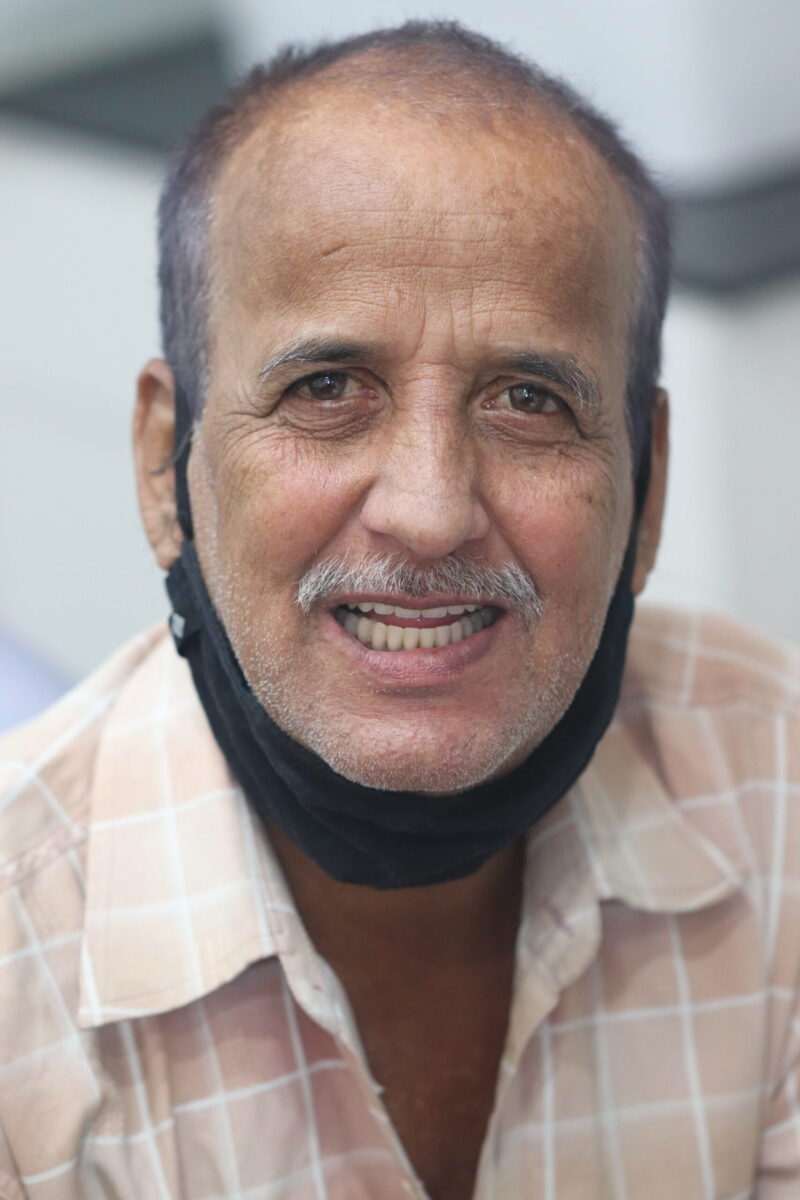
A Natural-Looking Smile with Dentures
This photograph shows an actual patient wearing dentures. It illustrates how a denture can contribute to a natural-looking smile and help a person feel more comfortable showing their teeth.
Every patient’s oral condition, denture design and result are different. The appearance of one case does not guarantee the same outcome for another patient.
Patient photograph published with appropriate consent. Individual results vary.
How Is a Denture Made?
Denture treatment involves more than making an appliance. Clinical assessment, design, fit and follow-up all contribute to its function and comfort.
Consultation and assessment
The dentist examines the mouth, remaining teeth, gums, bite and supporting tissues, and discusses your concerns and expectations.
Planning and records
Impressions or digital records, bite registration and other measurements are taken as appropriate for the selected denture design.
Design and fabrication
The denture is fabricated using the planned materials and laboratory workflow. Trial appointments may be used to evaluate fit, appearance and bite.
Fitting and delivery
The dentist checks the fit, bite and appearance, explains how to insert and remove the denture, and provides care instructions.
Adjustment and adaptation
Some initial awareness, altered speech or sore spots can occur. Contact the clinic for assessment rather than attempting to adjust the denture yourself.
Review and maintenance
Periodic reviews help assess fit, oral tissues, the remaining teeth and whether repair, relining or replacement may be needed.
Benefits and Limitations of Dentures
Potential benefits
- Replace missing teeth and restore aspects of chewing function.
- Improve the appearance of a smile and support facial appearance.
- Help improve speech affected by missing teeth, although adaptation may be needed.
- Provide removable or implant-supported options depending on individual needs.
What to keep in mind
- New dentures may require an adjustment period and follow-up visits.
- Lower complete dentures can be more difficult to stabilise than upper dentures.
- Dentures do not function exactly like natural teeth.
- Fit can change over time as the mouth and supporting tissues change.
- Implant-supported options involve additional assessment, treatment and maintenance.
How to Care for Your Dentures
Clean them daily
Clean removable dentures with a denture brush and a suitable denture-cleaning product. Avoid hot water, which can distort some denture materials.
Look after your mouth
Clean your gums, tongue and any remaining natural teeth daily. Follow your dentist’s instructions for any implant attachments or supporting teeth.
Attend follow-up visits
Arrange a review if the denture becomes loose, causes persistent soreness, cracks or affects eating. Do not use household glue or modify it yourself.
Whether a removable denture should be worn overnight depends on your treatment stage and clinical instructions. Ask your dentist how to store and clean your specific denture.
How Much Do Dentures Cost in Noida?
The cost of dentures depends on the type of prosthesis, the materials used, the complexity of the case, laboratory requirements and whether additional procedures are needed.
Complete dentures, partial dentures, BPS dentures, implant-retained overdentures and fixed implant-supported teeth have different treatment requirements and costs. A reliable estimate can be provided after assessing your needs and discussing suitable options.
At your consultation, ask for a clear explanation of what the proposed treatment includes, the expected appointments, any additional procedures and the follow-up arrangements.
Frequently Asked Questions About Dentures
How long does it take to get dentures?
The time varies with the denture type, clinical complexity and number of appointments required. Extractions, healing, additional procedures and laboratory stages can affect the timeline. Your dentist can provide an estimate after assessment.
Will dentures look natural?
Dentures can be designed to complement your facial features, smile and remaining teeth. The final appearance depends on the available records, denture design, materials and clinical circumstances.
Can I eat normally with dentures?
Many people learn to eat a wider range of foods as they adapt. Starting with softer foods and chewing carefully may help. Some foods can remain difficult, particularly with conventional lower complete dentures.
Will dentures affect my speech?
Speech may feel different initially, and some people need practice to adapt. If a speech problem persists, have the fit and design assessed by your dentist.
Are dentures better than dental implants?
Neither option is best for everyone. Conventional dentures are removable and do not require implant surgery. Implant-supported solutions may improve retention or provide fixed replacement teeth in suitable cases, but they require additional assessment, treatment and maintenance.
How long do dentures last?
There is no single lifespan that applies to every denture. Wear, breakage, changes in the supporting tissues, oral health and maintenance all affect how long it remains suitable. Regular reviews help identify when adjustment, relining, repair or replacement is needed.
What should I do if my dentures become loose or painful?
Arrange a dental review. The denture may need adjustment, relining or replacement, or there may be an issue with the supporting tissues. Avoid trying to reshape the denture yourself.
Can I get dentures if I have only a few missing teeth?
Yes, a partial denture may be an option when some natural teeth remain. Other treatments may also be suitable, depending on the location of the missing teeth, the condition of the remaining teeth and your preferences.
Are implant-retained overdentures removable?
Yes. An implant-retained overdenture is designed to be removed by the patient for cleaning, following the dentist’s instructions. A fixed implant-supported full-arch prosthesis is a different type of restoration.
Explore Your Denture Options at Dentessence
If you are missing teeth, struggling with an uncomfortable denture or considering implant-supported replacement teeth, arrange a consultation to discuss the options appropriate for your situation.
Dentessence Dental Care · Noida